- Now Frolic
- Posts
- Winter Sluggishness Isn’t Physical — It’s Mental
Winter Sluggishness Isn’t Physical — It’s Mental
A Former Air Force Cadet on Mental Toughness, Cold Mornings, and Choosing Movement

Janine Canillas
February 14, 2026
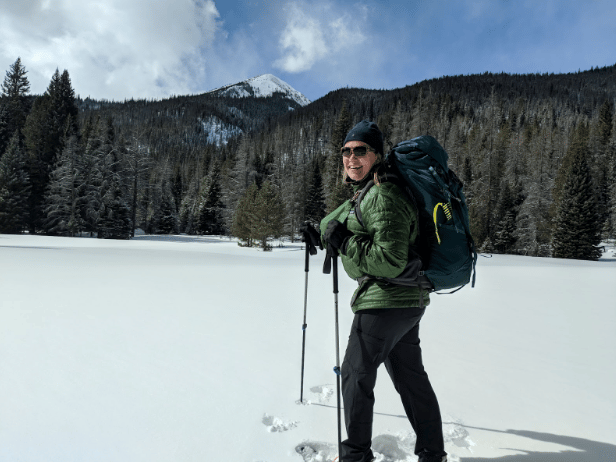
Across much of the U.S., winter storms have wreaked havoc and colder days are the norm. Trails are icy. Morning darkness lingers. For many outdoor athletes — runners, hikers, horseback riders — motivation can disappear somewhere between the thermostat and the front door. Before you know it, the progress you hoped to make stalls as frost coats the ground and you slip back into your pajamas or hit snooze. No matter what you try — setting your clothes by the door, making ambitious plans — good intentions fade when the wind screams through the windowsills. Staying active outdoors, especially in the northern parts of the country, requires a kind of mental toughness few people talk about; something Maxie Jane Torrens Frazier understands well.
A former Air Force Academy (USAFA) cadet, Frazier grew up in Washington State near Olympia, in Montesano — a small, economically-depressed town shaped by horses and rural life. She entered the Air Force as part of just the twentieth class of women to go through the academy. Today, she’s an English professor and creative writing teacher at Southern New Hampshire University, but it’s her relationship with discomfort, forged through survival training and decades of outdoor movement, that offers a rare perspective on how to move through winter when motivation runs thin. “Psychological readiness is everything,” Frazier said. “Not only am I not going to die — I know it’s going to be uncomfortable.”

Choosing movement, even on cold winter days. (Maxie Jane Torrens Frazier)
Uncomfortable it was. Basic training meant jogging outdoors in all conditions. Survival, evasion, resistance, and escape, now known at USAFA as Combat Survival Training, pushed her further: wilderness navigation through the Rocky Mountains, aircraft water-ditch training, and resistance exercises where instructors tracked cadets through forests where it might still snow in June, while they learned to live off the land.
“You have to be a self-starter,” Frazier said. “Nobody was going to carry you through it.” Frazier was young, driven, and one of only a few women in her group. “There was a lot of pressure not to be weak,” she recalled. Even after nearly stepping off a cliff in total darkness while evading “enemy aggressors” and navigating by compass, Frazier learned how to stay calm and function in hostile environments. Cold, dehydration, fatigue, terrain — these stack quickly. However, none of them stop you the way your own internal resistance does. That lesson still shapes how she approaches outdoor activity today.
In retirement, Frazier doesn’t need to chase performance metrics, but she remains active. Most of her life, she rode horses through frozen winters and she still takes her Australian cattle dog out daily, no matter the weather. Ask Frazier what matters more outdoors – physical conditioning or mindset – and she doesn’t hesitate: “Psychological readiness. Always.” That acceptance separates people who train year-round from those who wait for spring. Winter workouts don’t fail because of the weather, she explained. They fail because people negotiate with comfort. Frazier admitted that simply opening the door is often the hardest rep. “When it’s 15 degrees outside and you still have to feed animals,” she said, “it takes mental toughness just to open the door.”

Spending time outdoors with her animals is part of how Frazier stays active year-round. (Maxie Jane Torrens Frazier)
Responsibility helps, but mindset matters more. Instead of chasing motivation, Frazier relies on systems: playlists that carry her through slower runs, audiobooks that make walks feel purposeful, routines that don’t depend on feeling ready. “Working out is good enough,” she said. “It doesn’t have to be perfect.” She reframeed it as choice: not I don’t want to, but I choose. She saw this firsthand in survival school, where people routinely exceeded limits they thought were fixed. The difference wasn’t motivation. It was habit.
These days, as life moves more slowly, Frazier emphasizes sustainability over maximum output. “Real strength isn’t just functional fitness,” she said. “It’s mental wellness. It’s knowing when to step outside — and also knowing when to allow yourself pleasure.” Reading while walking. Listening to other people’s words. Competing only with herself. That philosophy carries into every cold morning workout — not punishment, not performance, just being present.
As the cold tightens its grip and presses harder every morning, Frazier offers this reminder for anyone staring at icy sidewalks or dark trails: You don’t need to feel motivated. You need to decide. Discomfort isn’t failure. It’s training.
“I admire who I’m becoming,” she said. Sometimes, that growth begins with nothing more than opening the door.
ADHD management designed for how your brain actually works

Most ADHD apps are just glorified timers. Inflow is different - built by people with ADHD, backed by clinical psychologists, using CBT-inspired strategies. Learn to manage time blindness, burnout, overwhelm, and procrastination in 5-minute daily modules. Real tools, real change.
Unbiased News Trusted by 2.3 Million Americans!

The Flyover is a refreshing alternative to traditional news. We deliver quick, fact-focused coverage across politics, business, sports, tech, and more—without bias or spin. Our editors find the day’s most important stories so you don’t have to. Join over 2.3 million readers who start their day informed.
Janine Parkinson Canillas is a Venice Beach–based writer and paddle tennis player. She has been published in The Guardian and the LA Times, blending sharp storytelling with a passion for sport and culture. Janine is also an award-winning Filipino martial artist and boxing champion as well as a former stunt performer for Film and Television.