- Now Frolic
- Posts
- The More Artificial Life Gets, the More Valuable Outdoor Sports Become
The More Artificial Life Gets, the More Valuable Outdoor Sports Become
Why Sports Matter More in the Age of AI

Janine Canillas
May 09, 2026

Artificial Intelligence is the big conversation right now.
Everyone is panicking about job losses, the entertainment industry collapsing, and “scaling solutions” is becoming the most despised phrase of the century.
I’m not anti-AI. Spellcheck (the OG of writing assistants) alone has saved me some mishaps from being educated in Canadian English then moving to the U.S. where efficiency strips the ‘u’ from color and honor.
I keep returning to one question: If machines do everything, what is left for us?
My grandfather thought computers would solve that. Back in the 1990s, when buying a personal computer felt like financing a moon landing, he bought an Apple computer for our family and told my brother and me computers would change everything. We wouldn't have to work as hard as he did. We would also have more free time. He assumed we'd spend it outdoors since we loved roaming the town on bikes and throwing rocks into the lake.
Instead, this technology brought us video games, email, smart phones, and social media. Before I knew it, the remainder of my childhood and early adulthood was sucked up in a vacuum. I was inside, staring out at a world I had to schedule into my calendar just to visit. The iPhone — sold as a device that “reinvents the phone” — became less of a phone and more of an emotional support rectangle permanently fused to our palms.
In an increasingly artificial world, outdoor sports may be one of the last places where struggle, presence, and human grit still can’t be automated. (Janine Parkinson Canillas)
Still, perhaps AI will be the thing that delivers this old promise grandpa made: machines handling tedious work while humans reclaim their lives. Like the dishwasher, laundry machine, or every other invention that was supposed to save us time but somehow resulted in multitasking.
I want sweat, risk, weather, failure. I want a problem that can’t be solved with a prompt.
The more AI grows, the more I crave reality. Not metaphorically, but literally. I want sweat, risk, weather, failure. I want a problem that can’t be solved with a prompt.
This is why outdoor sports will survive the AI era better than almost anything else.
This April in Beijing, humanoid robots raced alongside thousands of humans in the city's annual robot half marathon. The headlines called it a milestone.
Look closer: the robots ran a pre-mapped course, required handlers, and needed active monitoring to keep from overheating or failing. Meanwhile, elite human runners do what machines still cannot – adapt in real time, manage pain, read terrain, and perform under pressure without anyone there to reboot them.
Uganda's Jacob Kiplimo set the human world record – 57 minutes – in Lisbon this March. No handlers. No cooling system. He just ran.
Humans 1. Robots 0.
If we put robots in an actual race where there is weather, crowds, an uneven trail, and no handlers, they’d literally fall apart. That’s where the human story takes over.
I’ll cheer for my friend at her half marathon not because of her pace, but because I know what it costs her. She has bad knees and self-doubt. She dragged me out for a 5k, then a 10k, and I nearly died in a CVS parking lot. I know it’s hard. That’s exactly why her story matters.
We don't love sports because they're efficient. We love them because they're messy, painful, unpredictable. We love watching people sweat and suffer nobly.
A robot can win a race, hit a tennis ball, even box, though eventually someone will have to explain why it got disqualified for detaching its opponent's head. None of it matters without a human involved. No one wants to hear a robot's comeback story. There's no ESPN special where a machine describes overcoming adversity after its charging cable broke in 2019. There is no robot Rocky montage.
When work, art, and connection become increasingly automated, what remains are the things that can't be outsourced: effort, courage, endurance, presence.
Outdoor sports and physical human performance broadly grow more valuable as artificial life expands. When work, art, and connection become increasingly automated, what remains are the things that can't be outsourced: effort, courage, endurance, presence.
AI can analyze your golf swing and optimize your training plan. It can't do the push-up for you. It can't calm your nerves on the start line. It can't replicate the strange, quiet satisfaction of doing something that is genuinely hard simply because you wanted to know if you could.
Sun on your skin. Lungs burning halfway up a hill. A game point balanced on the edge of a tennis net.
That is still ours.
Your Boss Will Think You’re an Ecom Genius

Optimizing for growth? Go-to-Millions is Ari Murray’s ecommerce newsletter packed with proven tactics, creative that converts, and real operator insights—from product strategy to paid media. No mushy strategy. Just what’s working. Subscribe free for weekly ideas that drive revenue.
Understanding Rejection Sensitive Dysphoria: How This App Can Help
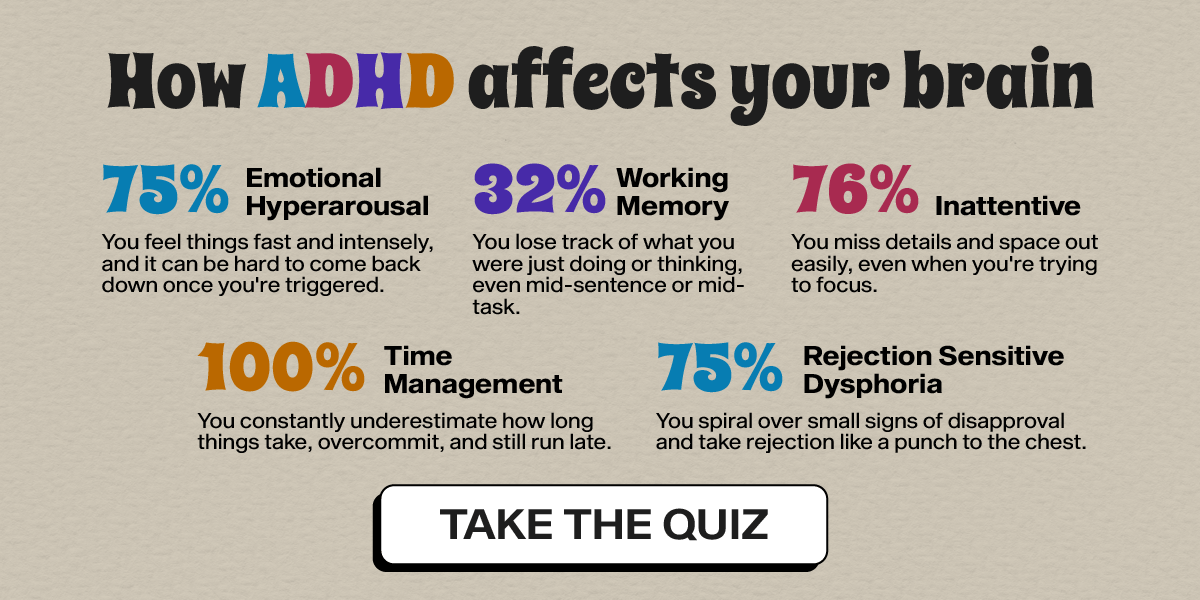
For those with ADHD, a simple "no" can trigger Rejection Sensitive Dysphoria (RSD), making daily life hard. Developed by clinical psychologists, Inflow helps you understand and navigate RSD triggers using science-backed strategies. In just 5 minutes a day, you can build emotional resilience. Stop spiraling and start reframing your thinking with a custom learning plan.
Janine Parkinson Canillas is a Venice Beach–based writer and paddle tennis player. She has been published in The Guardian and the LA Times, blending sharp storytelling with a passion for sport and culture. Janine is also an award-winning Filipino martial artist and boxing champion as well as a former stunt performer for Film and Television.